


Updated: July, 2026
Upselling and cross-selling are two of the most effective, and cost-efficient, revenue levers available to eCommerce and SaaS businesses. They have been used for ages in traditional business (think about retail, banking, and even restaurants) and can generate more value from customers you’ve already acquired, without adding to your acquisition costs.
These tried-and-true tactics can be used to scale eCommerce businesses as well; for an example, upselling is a major component of growing SaaS businesses.
The key to success, however, pertains to smart implementation. The recommendations should not come across as intrusive to the customers, but genuinely relevant for them and their needs. However, your product line depth and target market will greatly influence the way you approach these two tactics.
The economics are compelling. According to 2025 benchmarks from Userpilot, selling to an existing customer is 60-70% more likely to succeed than converting a new prospect. At the same time, product recommendations now drive up to 31% of total eCommerce revenues – a figure that continues to grow as AI-powered personalization becomes standard in digital commerce.
This guide covers what each tactic means, which strategies deliver results, and how to decide which fits your business model.
Quick Summary: Upselling vs. Cross-Selling at a Glance
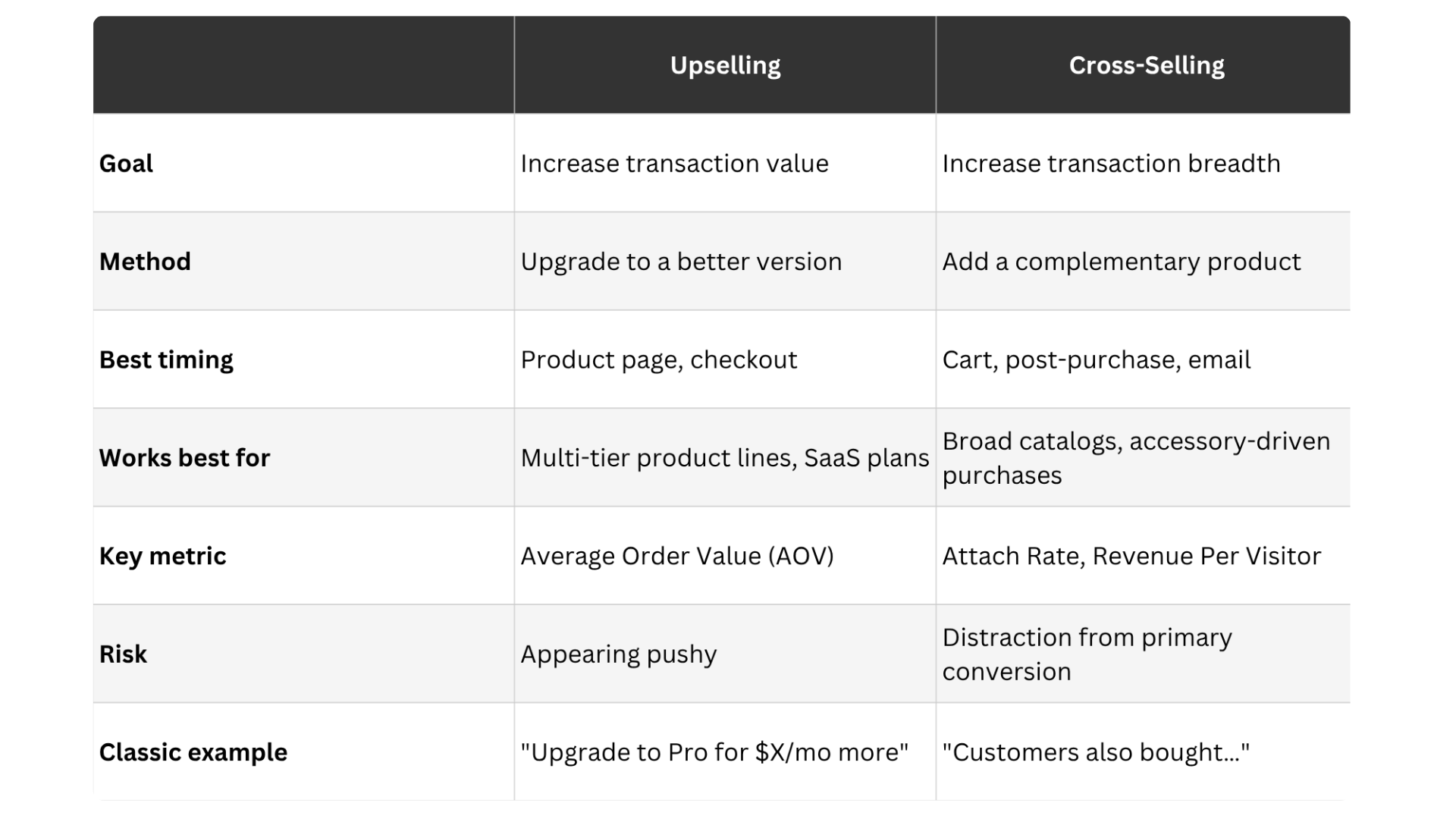
Cross-selling: Recommending a complementary product. Goal: increase sales volume. Best for customers who have already committed to a primary purchase.
Upselling: Recommending a higher-value version of the product. Goal: increase transaction value. Best for customers still evaluating their options.
What is Cross-Selling?
Cross-selling is the practice of recommending complementary products alongside a customer’s primary purchase to increase the total order value. The goal is not to replace what the customer is already buying, it is to enhance it with something they actually need.
The classic example: a customer buys a laptop, and you suggest a laptop bag and a wireless mouse. Amazon has turned this into a revenue engine, approximately 35% of Amazon’s total revenue is attributed to cross-sells, powered by its collaborative filtering algorithms that analyze what customers with similar purchase histories also bought.
McKinsey research shows that cross-selling can increase sales by 20% and profits by 30% when executed with proper relevance and timing. According to Forrester analyst Sucharita Kodali, personalized product recommendations account for an average of 10–30% of ecommerce revenues, and that figure rises toward 31% for stores using AI-powered recommendation engines.
Cross-selling focuses on breadth. More items in the transaction, rather than a higher price for the same item.
Pros and Cons
| Pros | Cons |
|
|
Recommendation fatigue: Customers exposed to cross-sell offers at every touchpoint (product page, cart, checkout, post-purchase) can become desensitized or annoyed. A sequenced, selective approach, choosing the single highest-value placement rather than saturating every stage, typically outperforms an always-on strategy.
How to Cross-Sell? The strategies
- Product page
A popular cross-selling method is to showcase a list of product recommendations at the bottom of the product page. Think about features such as “buy the look” for online clothing stores or “you may also like” product carousels.
“Others also bought/liked” lists appeal to the human curiosity. So, customers are at least likely to have a look at those lists, if not to add some of those items in their cart.
- Cross-selling in the checkout page/shopping cart
The checkout page facilitates cross-selling, as customers pay more attention to it. It is here that they must introduce sensitive information like credit card details. Most often, brands introduce the “customers who purchased this item(s) also purchased” strategy at this point in the buying process.
You should ensure that the cross-sell is placed correctly in the shopping cart. Avoid showing it right before the customer places the order. Instead, introduce it as soon as the customer adds a product to the cart, or when they start reviewing their cart.
- Post-purchase cross-selling on the Thank-You page/follow-up email
Even if customers didn’t add a complementary product in the previous steps of the buying process, the opportunity is not lost. As opposed to the previous strategies, placing cross-sells on the Thank-You page/ follow-up email does not disrupt the purchase process. Therefore, there’s a higher likelihood that the customer would be responsive to the cross-sell offer.
In addition, by introducing such an offer in your Thank-You page/follow-up email, you provide extra value to an already-committed customer whose data you have stored. This makes a second purchase very convenient to complete. Even so, you need to make it seamless for the customer to add the cross-sell product to their purchase (consider one-click features).
- Cross-sell a lower-value product on the Thank-You page
Cross-selling a lower-value/discounted product on the Thank-You page could prove even more appealing to customers. Make it time-limited, and the cross-sell will be bound to succeed.
- Bundling/Package deals
Bundling is probably the most common cross-selling strategy.
A bundle can appeal greatly to the psychology of the consumer, as such an offer usually provides extra savings, as opposed to purchasing the products separately. By displaying the extra savings, you essentially provide an incentive to the customers to buy both products, instead of just one.
To create an effective bundle, make sure that the bundled products can be purchased separately as well. Otherwise, the bundle becomes a single product that adds no extra value to the customer. You may also analyze your customers’ aggregate behavior and identify what products are most commonly bought together (you still need to make sure that the products are related).
Cross-selling Example
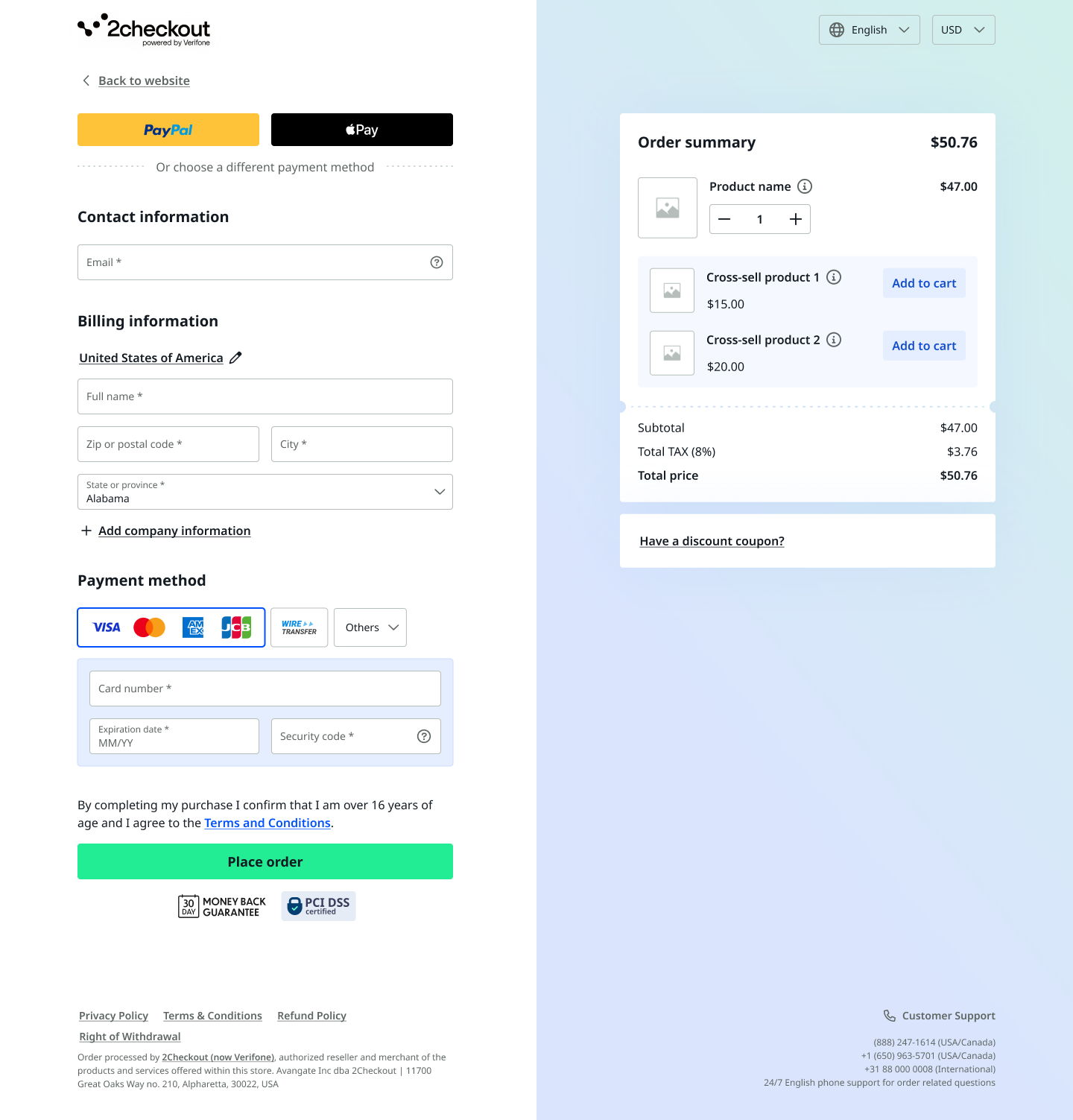
Source: 2Checkout. Example of a side-by-side cross-sell offer.
A software company sells a project management tool. On the checkout page, it cross-sells a time-tracking add-on, a complementary product that solves an adjacent problem the same buyer is likely to have. The offer is presented as an order bump: a single checkbox above the payment button reading “Add time tracking for $9/mo, most popular with project management subscribers.” The customer does not have to navigate away or re-enter payment details. This is a textbook cross-sell: relevant, low-friction, and timed at peak buying intent.
Invespo research found that personalized cross-sell recommendations, comprising just 7% of website visits, account for 26% of revenue. The personalization is what drives the outsized return.
Best practice from the expert

“Cross-sell like a champion. Never miss a chance to offer visitors more. You can even give them more opportunities to add to cart … right there within the cart itself! If they were interested in the product, maybe they’d like the accessory.
Suggest products relentlessly without taking them out of their flow. The cart is a fantastic place to offer companion products since they’ve already expressed buying intent. Every additional purchase here just adds to the bottom line for better conversion rate of your ecommerce business.”
Source: Shane Barker Blog
What is Upselling?
Upselling is the practice of encouraging a customer to purchase a more expensive, premium, or feature-rich version of a product they are already considering buying. Where cross-selling adds breadth to a transaction, upselling increases its depth, the customer gets more value from a single, higher-quality purchase.
In SaaS, upselling is the engine of Net Revenue Retention. A merchant might upsell a customer from a Basic plan to a Pro plan, from a monthly subscription to an annual one, or from a single-seat license to a team license. In ecommerce, an upsell might present a premium model of a product the customer is already viewing — a side-by-side comparison of the standard version versus the upgraded version.
Upselling focuses on value, a better version of what the customer already wants.
According to Harvard Business Review, acquiring a new customer costs 5 to 25 times more than retaining and expanding an existing one. For software and SaaS businesses, upselling to existing customers is consistently the most capital-efficient growth motion, dollar for dollar, expansion revenue from upsells requires a fraction of the sales and marketing investment needed to close a new account.
Pros and cons
| Pros | Cons |
|
|
How to Upsell? Strategies
- Upselling in the product page
This strategy is quite simple. It entails showcasing the different versions of your product side-by-side/in a comparative layout. It’s very likely that customers have not yet decided during this stage of the buying process. This increases the likelihood of them choosing a superior offer from the very beginning.
- Upselling in the checkout page/shopping cart
As in the case of cross-selling, by its very nature, the checkout page facilitates upselling as well. Once the customers add a desired product to their cart, you can provide them with relevant, higher-priced offers or additional features.
- Upselling in the Thank-You page/follow-up email
The Thank-You page and follow-up emails are great opportunities to convince your existing customers to spend more during their next purchase. Provide them a coupon, discount, or free shipping which can be redeemed at a certain threshold. Customers would therefore have an incentive to accept your upsell offer. You can also create a sense of urgency by means of a time-limited offer.
- Upselling at customer milestones
Timing is key in upselling. Apart from the previous strategies, there’s another time which can facilitate an upselling opportunity – when the customer achieves a milestone in their relationship with your business.
That’s a moment of trust when the customer is very happy. It would be a loss not to leverage it. You can naturally present an upsell offer as an opportunity to take your relationship to the next level.
- Premium offering
This is the most common upselling method. It refers to inducing your customer into buying the premium version of the product they are interested in. To do this, however, you need to have available premium versions for your product. This strategy is usually embedded in the pricing pages of SaaS/software companies where the plans and their features are showcased.
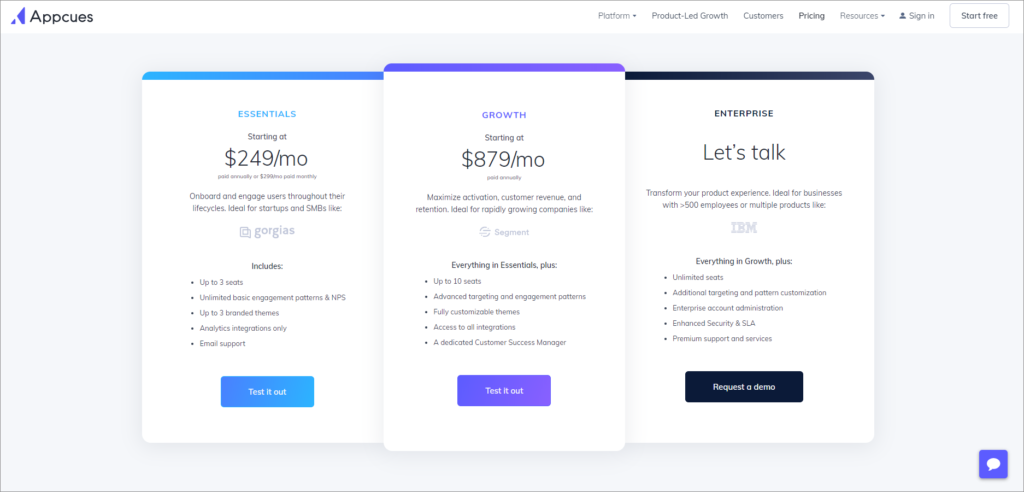
Source: Appcues
- Upsell the most sold, reviewed, and relevant products
Most reviewed and sold products work as social proof for customers.
“Bestsellers” are usually the most sold and popular products in your store (you can find out their popularity by looking at the number of page visits and clicks).
“Reviewed products” are also important. Shoppers can decide to purchase a higher-priced product because it was recommended by other fellow shoppers or because it had high ratings.
Make sure that the upsold product is relevant relative to the initial product that the customer considered. It should address the problem that the customer is trying to solve, otherwise you may end up losing a sale.
In order for the upsell to make sense, make sure to include high-margin products in your offer. The “New Arrivals” offers work this way because, usually, newly launched products are more expensive. You can also easily define your “Featured products” and “Similar products” offers as the higher-priced products in your store.
Upselling Example
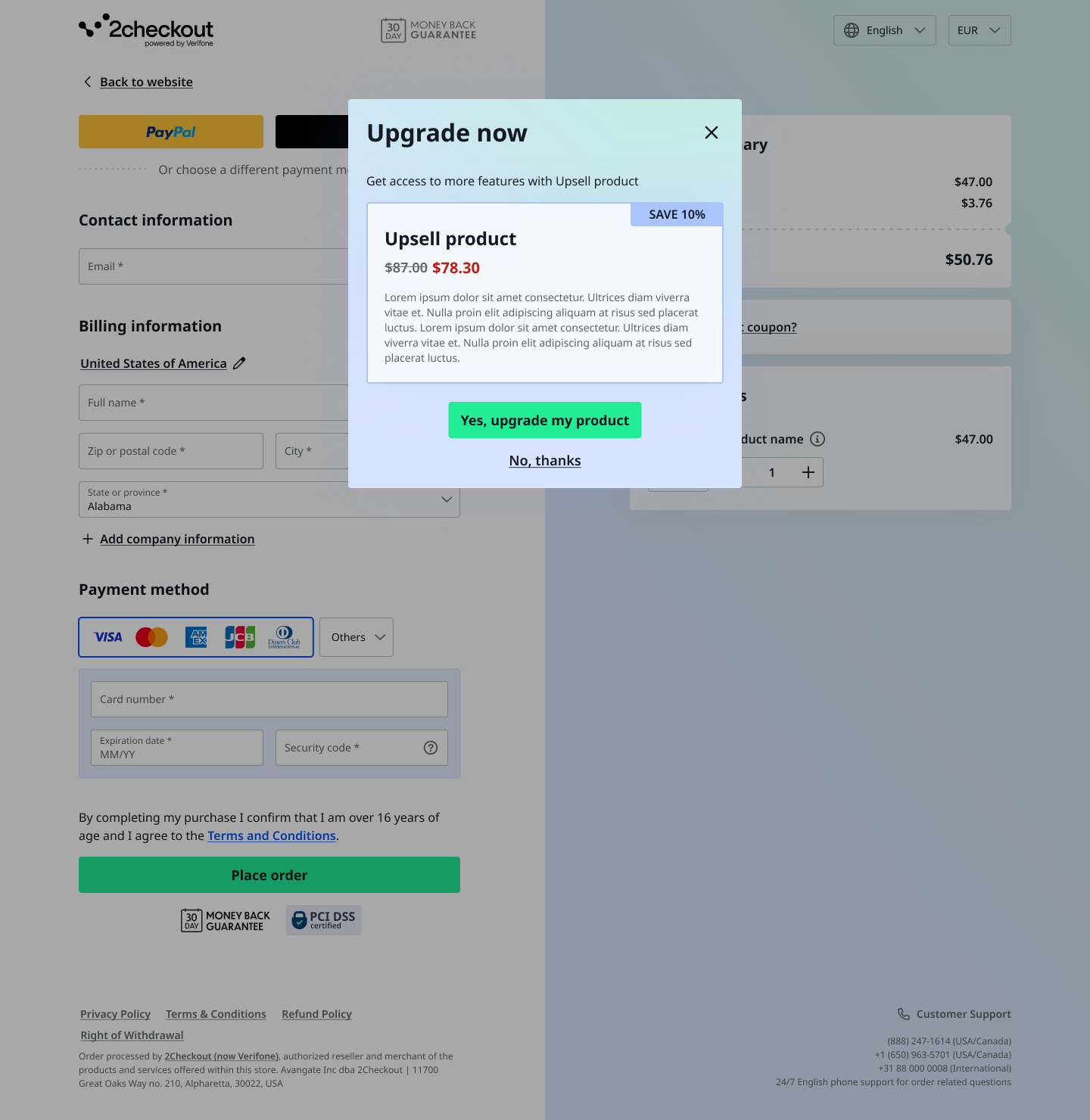
Source: 2Checkout. Example of an overlay upsell modal presented during the checkout flow.
A digital security software company presents two versions of its product at checkout: the standard antivirus plan and the premium security suite — shown side by side with a clear feature comparison. The premium version includes VPN, identity protection, and multi-device coverage. The price difference is visible, the benefit is immediate, and the customer can upgrade with one click.
This approach mirrors what the 2Checkout Bitdefender case study documented: through strategic cross-sell and upsell placements on thank-you pages with one-click features, Bitdefender increased conversion rates from 4.8% to 10–14%. Relevance and frictionless execution were the two critical variables.
Best practice from the expert

“To upsell existing clients, we show them the value of the upsell rather than the costs. We show them how they will benefit and profit from it. The goal is to show our clients that thanks to the upsell, they will get faster and better results”
Source: DataBox
As you can see, there’s a fine line between upselling and cross-selling strategies. They aren’t set in stone, and some upselling strategies can be used for cross-selling and the other way around. For instance, “Recommended products” can be used for both, either in the product page, checkout page, or follow-up email. Therefore, these strategies can be combined in multiple ways.
Needless to say, you always need to conduct A/B testing on upselling and cross-selling offers to determine which strategies work best for your eCommerce business.
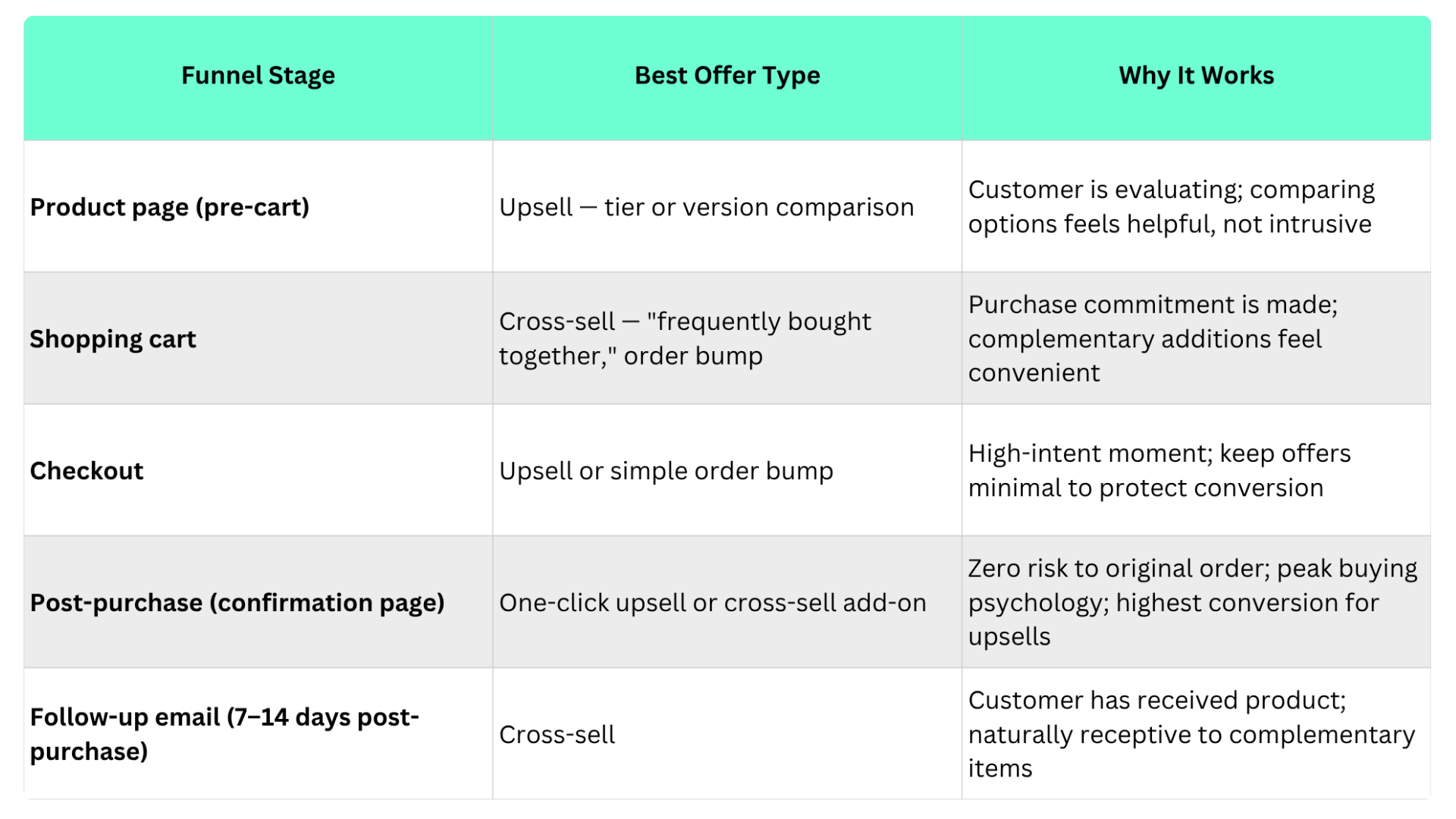
When to Present Offers: A Funnel-Stage Guide
Placement timing is as important as offer relevance. The same offer can convert well in one context and destroy a sale in another. Here is how upsells and cross-sells map across the customer journey:
Why are Cross-selling and Upselling Important?
- They increase average order value (AOV)
Both tactics work by increasing how much each transaction is worth, without increasing your traffic or your acquisition costs. If your average order is $50 and a cross-sell or upsell consistently raises it to $65, that 30% lift compounds across every transaction in your business. For more tactics, see our guide on best tactics to boost average order value.
- Revenue Per Visitor (RPV)
AOV alone does not tell the full story, a high-value upsell offer with low acceptance rates may not move RPV. The best programs optimize for Revenue Per Visitor: the total revenue generated divided by total site visitors. An offer that converts 8% of visitors at a $20 uplift is more valuable than one that converts 2% at a $50 uplift, depending on the math of your specific funnel.
- They improve customer satisfaction
When a recommendation is genuinely relevant, it does not feel like a sales tactic, it feels like service. A cross-sell of a compatible accessory or an upsell to a plan that better meets a customer’s actual needs both demonstrate that you understand what the customer is trying to accomplish. That perceived alignment builds trust.
- They increase customer retention and loyalty
Customers who purchase more products from you, through cross-sells, are harder to churn. Their investment in your ecosystem is deeper. Customers who upgrade to premium plans, through upsells, are typically your highest-LTV, lowest-churn segment. Both tactics improve retention economics without a dedicated retention campaign. Learn more about maximizing recurring revenue.
- They increase customer lifetime value (CLV)
Every increase in AOV and every improvement in retention directly increases CLV. Upselling and cross-selling are two of the highest-leverage inputs into the CLV formula, which is why they are prioritized by the most sophisticated ecommerce and SaaS businesses equally.
- They improve conversion rates
Relevant, well-timed offers increase the likelihood that a browsing session ends in a completed purchase. A customer on the fence about buying a product may convert when they see that a bundle makes the value proposition more complete. For a deeper look, explore conversion rate optimization strategies that generate revenue uplift.
How personalization is changing upsell and cross-sell delivery
The strategies described above, product page carousels, cart suggestions, post-purchase offers, represent the right framework. How those offers are populated and delivered has changed significantly.
Manual catalog matching (a merchandiser deciding that Product A pairs well with Product B) remains valid for smaller catalogs. At scale, behavioral recommendation engines now do this automatically: analyzing purchase history, real-time browsing behavior, session context, and segment-level patterns to surface the most relevant offer for each individual customer.
The performance difference is significant. Personalized upsell and cross-sell offers convert at up to 2.8x the rate of generic recommendations. Stores using AI-assisted personalization report average AOV increases of 10–35% compared to non-personalized approaches, and AI-powered recommendation engines now account for up to 31% of total ecommerce revenue for businesses that have implemented them fully.
For businesses without a dedicated personalization platform, behavioral segmentation is a practical starting point: segment by purchase history, by customer tenure (new vs. returning), and by average order value, then tailor offers to each segment. A returning customer who has purchased twice is more receptive to an upsell. A first-time buyer is more receptive to a complementary, lower-stakes cross-sell that builds confidence in the brand.
Common upselling and cross-selling mistakes to avoid
Even well-intentioned upsell and cross-sell programs fail when execution undermines the offer. The most common mistakes:
- Recommending irrelevant products
Irrelevance is the fastest way to erode trust. If a customer buys a PDF editor and you cross-sell a cooking course, you signal that your recommendation system does not know them. Every offer should have a logical, obvious connection to what the customer is buying or has already bought.
- Presenting too many options
Limit recommendations to 2–3 items maximum. More than that triggers decision fatigue and often results in the customer choosing none. A single, well-chosen recommendation typically outperforms a carousel of eight.
- Interrupting the checkout flow
Pop-ups or multi-step upsell screens presented before payment is confirmed can cause abandonment. Cross-sell overlays during active checkout (particularly on mobile) are a documented conversion killer. Reserve intrusive placements for post-purchase, where the order is safe.
- Pricing the offer too aggressively relative to the original
A useful heuristic: a cross-sell should ideally cost less than 25% of the original purchase price. An upsell should not exceed 50% more than the product the customer is already considering. Beyond those thresholds, the offer begins to feel like a different purchase decision rather than a natural extension.
- Stacking offers across every touchpoint
Presenting upsells on the product page, in the cart, at checkout, and again post-purchase simultaneously creates offer fatigue. Sequence your offers strategically. Choose the highest-value placement for your specific product and audience, test it, and add additional touchpoints only after the primary one is optimized.
- Skipping personalization entirely
Generic recommendations underperform personalized offers by a significant margin. Even basic behavioral segmentation improves relevance and conversion rates meaningfully.
Cross-selling vs Upselling – Which One to Choose for Your eCommerce Business?
The decision comes down to three variables: your product catalog, your customer’s relationship stage, and the funnel moment.
When do you cross-sell?
- Your business sells a primary product that naturally pairs with complementary items or accessories
- You are running post-purchase email sequences and the customer has already received and used the original product
- You have a customer who is in the final buying stage and a low-cost, complementary offer will not distract from the primary conversion
- You are managing cart abandonment and want to add value to an existing session
- The customer is new to your brand. A helpful, lower-stakes cross-sell builds trust better than an aggressive upgrade ask
When do you upsell?
- Your product line includes multiple pricing tiers or premium versions of the same product
- You operate a SaaS or software business with tiered subscription plans, this is your primary monetization lever
- The customer is in an early or middle evaluation stage, comparing options and receptive to feature education
- A returning customer has already demonstrated commitment to your product and is ready for a more substantial conversation about upgrade value
- You are at a post-purchase confirmation page and the original sale is secured, low-risk, high-intent moment for a meaningful upgrade offer
A Note on Combining Both
The most effective programs do not choose one exclusively. A SaaS business might upsell a customer from Basic to Pro at checkout, then cross-sell an onboarding service in the post-purchase email 7 days later. An ecommerce store might upsell to a premium product version on the product page, then cross-sell a complementary accessory as an order bump at checkout. The sequence matters. The relevance matters. The friction of each offer must match the vulnerability of the moment in which it appears.
Conclusion
Upselling and cross-selling are not interchangeable tactics, they solve different revenue problems at different moments in the customer journey. Upselling increases the value of each transaction by moving customers toward premium options. Cross-selling increases the breadth of each transaction by adding complementary value. Both improve Average Order Value, Customer Lifetime Value, and retention when executed with genuine relevance and appropriate timing.
The businesses that do this best are not those that present the most offers, they are the ones that present the right offer, at the right moment, with the right level of friction. That means choosing placements deliberately, limiting the number of recommendations shown, pricing offers in proportion to the original purchase, and sequencing upsells and cross-sells across the customer journey rather than stacking them at every touchpoint simultaneously.
As personalization technology has matured, many merchants now use behavioral data and AI-assisted recommendation engines to automate offer relevance, ensuring the right upsell or cross-sell reaches the right customer at the right moment, without manual catalog curation.
Start by auditing your current product catalog: do you have complementary items that make logical pairs? Do you have pricing tiers that deliver meaningfully more value at a higher price point? Identify the single highest-leverage placement for each, test one offer at a time, and build from there.
The goal is to make every offer feel like a natural extension of what the customer already decided to do, not a detour from it.
Check out these shopping cart customization tips, designed to help you optimize your checkout process and boost your sales.
Frequently Asked Questions
What is the difference between upselling and cross-selling?
Upselling encourages a customer to purchase a higher-priced or premium version of a product they are already considering. Cross-selling recommends a different but complementary product to add alongside the primary purchase. Upselling increases transaction value; cross-selling increases transaction breadth.
Which is more effective: upselling or cross-selling?
It depends on your catalog and customer stage. Upselling typically generates a larger per-transaction revenue lift. Cross-selling tends to achieve higher acceptance rates because the additional item is lower-cost and additive. Most businesses benefit from using both at different funnel stages rather than choosing one exclusively.
When is the best time to present an upsell offer?
Product pages (where customers are comparing options) and the post-purchase confirmation page (where the original sale is secure) are the two highest-performing upsell placements. Checkout upsells also work for simple, single-option upgrades.
What is a post-purchase upsell?
A post-purchase upsell is an offer presented on the order confirmation page after payment is complete. Because the original sale is secured, there is no risk of losing the transaction. One-click post-purchase upsells average a 4–8% acceptance rate.
When should I cross-sell instead of upsell?
Cross-sell when your catalog includes complementary products rather than tiered versions of the same item, when a customer is new to your brand and an upgrade ask would feel premature, or when you are running post-purchase email sequences and the customer has already received and begun using the original product.
How does personalization improve upsell and cross-sell results?
Personalized recommendations convert at up to 2.8x the rate of generic ones. AI-assisted recommendation engines, which analyze purchase history, browsing behavior, and session context, surface the most relevant offer for each customer automatically, increasing both acceptance rate and AOV.
What are the most common upselling and cross-selling mistakes?
Recommending irrelevant products, showing too many options at once, interrupting the active checkout flow with cross-sell pop-ups, pricing offers too aggressively relative to the original purchase, and stacking offers at every touchpoint simultaneously are the most frequently documented conversion killers.